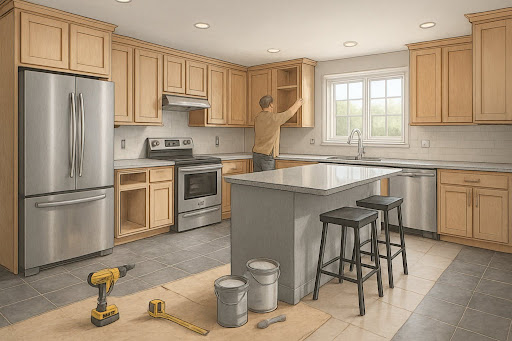
A full kitchen remodel transforms your entire cooking space by replacing or updating every major component, from cabinets and countertops to flooring and appliances. Unlike minor updates that focus on one or two elements, this comprehensive approach gives you a completely new kitchen that better fits your needs and style.
Research shows that kitchen remodeling can provide a 100 percent return on investment, making it one of the most valuable home improvement projects you can undertake. We’ll walk you through what makes a remodel “full,” the key elements involved, and the step-by-step process from planning to completion.
Whether you’re dealing with an outdated layout or simply want to create your dream cooking space, understanding the scope and timeline of a full kitchen remodel helps you make informed decisions. The average kitchen remodel requires 2,500 decisions, so we’ll break down the process into manageable steps.
Key Takeaways
- Full kitchen remodels involve replacing all major components including cabinets, countertops, flooring, and appliances
- The remodeling process follows a specific timeline from planning and design through installation and finishing touches
- Proper planning and understanding the scope helps you make the thousands of decisions required for a successful project
What Is a Full Kitchen Remodel?
A full kitchen remodel involves completely changing every major element of your kitchen space, from cabinets and countertops to flooring and electrical systems. This comprehensive approach differs from partial renovations that only update specific components.
Defining a Complete Kitchen Renovation
A complete kitchen renovation means we replace or update all major kitchen components at once. This includes cabinets, countertops, flooring, appliances, plumbing, and electrical systems.
We typically start by removing everything down to the walls. Sometimes we even modify the layout by moving walls or changing the room’s footprint.
The average kitchen remodel requires 2,500 decisions. These choices cover everything from cabinet hardware to paint colors.
A full kitchen remodel takes 6-12 weeks to complete. The timeline depends on the scope of work and any structural changes needed.
Key Components of a Remodel
Cabinets form the backbone of any full kitchen renovation. We replace both upper and lower cabinets with new styles, materials, and configurations.
Countertops get completely replaced with materials like granite, quartz, or marble. We remove old surfaces and install new ones that match the design.
Appliances include the refrigerator, stove, oven, dishwasher, and microwave. We upgrade to modern, energy-efficient models.
Flooring gets torn out and replaced with new materials like tile, hardwood, or luxury vinyl. This creates a fresh foundation for the space.
Plumbing and electrical systems often need updates. We move pipes, add outlets, and install new lighting fixtures.
Paint and finishes complete the transformation with fresh colors and textures throughout the space.
Kitchen Remodel vs Partial Renovation
A full kitchen remodel changes everything in the space. We replace all cabinets, countertops, appliances, and flooring in one project.
A partial renovation only updates specific elements. We might replace just the countertops and paint the cabinets, or only upgrade appliances.
| Full Remodel | Partial Renovation |
|---|---|
| Replace all cabinets | Keep existing cabinets |
| New countertops | May keep countertops |
| All new appliances | Update select appliances |
| New flooring | Keep existing flooring |
| 6-12 weeks | 2-4 weeks |
Full kitchen remodeling costs more upfront but creates a completely coordinated look. Partial renovations cost less but may look pieced together.
We recommend full remodels when cabinets are over 20 years old or the layout doesn’t work for your needs. This approach gives us the freedom to create the exact kitchen you want.
Core Elements of a Full Kitchen Remodel
A full kitchen remodel involves replacing or updating four main components that define the space’s function and appearance. These elements work together to create a kitchen that meets your cooking needs while matching your style preferences.
Cabinetry and Storage Solutions
Kitchen cabinets form the backbone of any remodel project. We recommend starting with a layout that maximizes your storage while keeping frequently used items within easy reach.
Cabinet styles fall into three main categories:
- Shaker style – Clean lines with recessed panels
- Flat panel – Smooth, modern appearance
- Raised panel – Traditional look with detailed molding
Cabinet doors can be replaced without changing the entire cabinet box. This saves money while still updating your kitchen’s appearance.
Storage solutions should match how you cook and live. Pull-out drawers work better than deep shelves for pots and pans. Lazy Susans help you reach items in corner cabinets.
We suggest planning for these storage needs:
- Spice racks near the stove
- Trash pull-outs under the sink
- Pantry storage for dry goods
- Drawer dividers for utensils
Quality cabinet hardware makes a big difference in daily use. Soft-close hinges and drawer slides prevent slamming and last longer than basic options.
Countertop Materials and Selection
Countertops take up significant visual space and handle daily wear from cooking tasks. Each material offers different benefits for durability, maintenance, and cost.
Granite remains popular for its natural beauty and heat resistance. It needs sealing every 1-2 years to prevent stains.
Quartz requires no sealing and offers consistent patterns. It resists scratches and stains better than natural stone.
Marble countertops provide classic elegance but scratch and stain easily. They work best for baking areas rather than main prep zones.
A laminate countertop costs much less than stone options. New laminate looks more realistic than older versions and comes in hundreds of patterns.
Butcher block adds warmth to kitchens and costs less than stone. It needs regular oiling and can be sanded to remove scratches.
Consider these factors when choosing:
- How much you cook
- Your cleaning preferences
- Available budget
- Overall kitchen style
Flooring Options for Kitchens
Kitchen flooring must handle spills, heavy foot traffic, and dropped items. The best choice depends on your lifestyle and maintenance preferences.
Luxury vinyl plank offers water resistance and comfort underfoot. It looks like wood or tile but costs less and installs easier.
Ceramic tile provides excellent durability and water resistance. Large format tiles create fewer grout lines to clean.
Hardwood flooring adds natural beauty but can be damaged by water. Engineered wood handles moisture better than solid hardwood.
Natural stone like travertine or slate offers unique patterns. It needs sealing to prevent stains and can be cold underfoot.
Laminate costs less than most options and installs quickly. Look for water-resistant versions designed for kitchens.
Key flooring considerations:
- Water resistance level
- Comfort while standing
- Cleaning requirements
- Compatibility with radiant heating
Choosing a Kitchen Island
A kitchen island adds counter space, storage, and seating to your remodel. The right size and features depend on your kitchen’s layout and how you use the space.
Size guidelines help ensure proper traffic flow:
- Leave 36 inches of walkway space around all sides
- Plan 24 inches of width per seated person
- Keep islands under 4 feet wide for easy reaching
Island functions can include:
- Extra prep space
- Sink or cooktop installation
- Storage drawers and cabinets
- Breakfast bar seating
- Wine storage or beverage fridge
Electrical planning should happen early in the design process. Islands need outlets for small appliances and proper lighting above the workspace.
Plumbing considerations add cost but create a convenient cleanup station. Installing a dishwasher in the island keeps dirty dishes out of sight during meal prep.
Rolling carts offer island benefits in smaller kitchens. They provide extra workspace when needed but can be moved when not in use.
Kitchen Remodel Process and Timeline
A full kitchen remodel follows three main phases that typically take 6-12 weeks to complete. The process moves from initial planning through demolition to final installation, with each phase requiring specific timeframes and preparation.
Planning and Design Phase
The planning phase takes 2-4 weeks and sets the foundation for your entire project. We start by measuring the existing space and creating detailed floor plans.
Design Development involves selecting layouts, materials, and finishes. Kitchen designers use extensive interviews to understand how you use your space and what activities happen in your kitchen.
We create complete specifications that include:
- Cabinet styles and configurations
- Appliance selections and placement
- Countertop materials and edge details
- Lighting and electrical requirements
- Plumbing fixture locations
Permit Applications happen during this phase. Most kitchen remodels require building permits for electrical, plumbing, and structural changes.
Ordering materials takes 3-6 weeks for delivery. Custom cabinets often have the longest lead times, so we place these orders early in the design process.
Demolition and Site Preparation
Demolition typically takes 2-3 days for a full kitchen remodel. We remove existing cabinets, countertops, flooring, and appliances first.
Structural Work includes moving walls, installing support beams, or changing window openings. This phase can add 1-2 weeks depending on the scope of changes.
We complete rough-in work for new plumbing and electrical systems. This includes:
- Moving water lines and drain pipes
- Installing new electrical circuits
- Adding gas lines for appliances
- Running data cables for smart home features
Inspections happen after rough-in work. We schedule these with local building departments and make any required corrections before moving forward.
Installation and Finishing Steps
Installation work takes 3-4 weeks and follows a specific sequence. We install drywall and complete painting before bringing in finished materials.
Cabinet Installation comes first, followed by countertop templating and fabrication. Stone countertops require 7-10 days between template and installation.
The final installation sequence includes:
- Flooring installation around cabinets
- Appliance delivery and connection
- Plumbing fixture installation
- Light fixture and switch installation
- Hardware and trim work
Final Inspections verify all electrical, plumbing, and gas connections meet code requirements. We schedule these before considering the project complete.
Touch-up work and final cleaning complete the renovation process. We walk through the finished kitchen to address any remaining details before project completion.
Appliance and Finishing Touches
The final phase of your kitchen remodel brings together modern appliances that enhance daily cooking and finishing elements that define your kitchen’s character. Strategic lighting placement, carefully selected backsplash tiles, and updated fixtures transform a functional space into your dream kitchen.
Modern Appliance Upgrades
We recommend prioritizing energy-efficient appliances that match your cooking habits and kitchen layout. The stove serves as your kitchen’s centerpiece, with options ranging from gas ranges to sleek induction cooktops.
Modern dishwashers operate quieter and clean more efficiently than older models. Look for units with adjustable racks and multiple wash cycles to handle different dish types.
Your fridge should complement your kitchen’s style while providing adequate storage. Consider these popular configurations:
- French door: Wide refrigerator compartment with bottom freezer
- Side-by-side: Narrow doors ideal for tight spaces
- Top freezer: Budget-friendly option with freezer above
Counter-depth models create a built-in appearance without custom installation costs. Kitchen appliances can consume significant energy, so we suggest choosing ENERGY STAR certified units.
Built-in appliances provide seamless integration but require precise measurements during planning. Plan electrical and plumbing connections early to avoid costly modifications later.
Backsplash and Tile Inspiration
The backsplash protects your walls while adding visual interest to your kitchen design. We find subway tiles remain popular due to their timeless appeal and easy maintenance.
Backsplash tiles come in numerous materials and patterns:
| Material | Benefits | Best For |
|---|---|---|
| Ceramic | Affordable, easy to clean | Budget-conscious remodels |
| Natural stone | Unique patterns, durable | Luxury kitchens |
| Glass | Reflects light, modern look | Contemporary designs |
| Metal | Heat resistant, sleek | Industrial styles |
Large format tiles reduce grout lines and create a cleaner appearance. Consider extending your backsplash to the ceiling for dramatic effect.
We recommend selecting backsplash colors that complement your countertops without competing for attention. Neutral tones provide flexibility for future updates.
Lighting Fixtures and Layout
Proper lighting combines task, ambient, and accent elements to create a functional and welcoming kitchen. We design lighting layouts with multiple layers for optimal illumination.
Pendant lights work exceptionally well over kitchen islands and breakfast bars. Install them 30-36 inches above the counter surface for proper task lighting.
Under-cabinet lighting eliminates shadows on work surfaces. LED strips provide even illumination and consume minimal energy.
Recessed ceiling lights offer general ambient lighting throughout the kitchen. Space them 4-6 feet apart for uniform coverage.
We suggest installing dimmer switches to adjust lighting intensity for different activities. Bright task lighting helps with food preparation, while softer ambient lighting creates a comfortable dining atmosphere.
Consider pendant styles that complement your kitchen’s design theme. Industrial fixtures suit modern kitchens, while traditional lanterns work well in farmhouse-style spaces.
Frequently Asked Questions
Full kitchen remodels typically cost between $20,000 and $50,000 for most homes. The project timeline usually spans 6 to 12 weeks depending on the scope of work and material availability.
How much does an average full kitchen remodel cost?
The average full kitchen remodel costs between $25,000 and $35,000 for a mid-range project. High-end remodels can reach $60,000 to $80,000 or more.
Labor costs make up about 35% of the total budget. Materials account for another 20% to 30% of expenses.
Cabinets represent the largest single expense at 30% to 40% of the budget. Countertops typically cost 10% to 15% of the total project cost.
Appliances can range from $3,000 for basic models to $15,000 for premium brands. Flooring costs vary from $3 to $12 per square foot depending on the material.
What are the key components to include in a full kitchen remodel?
Cabinets form the foundation of any kitchen remodel project. We recommend choosing quality construction with soft-close hinges and full-extension drawers.
Countertops should be durable and match your cooking habits. Popular options include quartz, granite, and butcher block surfaces.
New appliances improve both function and energy efficiency. The main appliances include a refrigerator, range or cooktop, dishwasher, and range hood.
Lighting combines task, ambient, and accent fixtures. Under-cabinet lighting helps with food preparation while pendant lights add style.
Flooring must withstand moisture and heavy foot traffic. Tile, luxury vinyl, and hardwood are common choices for kitchen floors.
How long does a typical full kitchen remodel take from start to finish?
Most full kitchen remodels take 8 to 12 weeks to complete. The timeline depends on the project scope and complexity.
Planning and design take 2 to 4 weeks before construction begins. This includes ordering materials and getting permits.
Demolition usually takes 1 to 2 days. Electrical and plumbing rough-in work requires another 3 to 5 days.
Cabinet installation takes 2 to 3 days for most kitchens. Countertop installation happens after cabinets are in place.
Appliance delivery and installation occur near the end of the project. Final touches like backsplash and paint add another week.
Can a full kitchen remodel significantly increase home value?
Kitchen remodels typically return 60% to 80% of the investment at resale. The exact return depends on the local market and quality of work.
Mid-range remodels often provide better returns than luxury upgrades. Over-improving for the neighborhood can reduce the return on investment.
Functional improvements like better storage and workflow add the most value. Modern appliances and updated electrical systems appeal to buyers.
The kitchen’s impact on home value depends on the rest of the house. A beautiful kitchen in a dated home may not maximize returns.
How can homeowners maximize their budget when planning a full kitchen remodel?
We recommend focusing spending on elements that get the most use. Invest in quality cabinets and countertops that last for decades.
Keep the existing kitchen layout when possible. Moving plumbing and electrical lines increases costs significantly.
Consider cabinet refacing instead of full replacement. This approach costs 30% to 50% less than new cabinets.
Shop for appliances during sales events like Black Friday. Many retailers offer package deals for multiple appliances.
Leave complex tasks like electrical and plumbing to professionals.
What are some current trends in kitchen design to consider for a remodel?
Two-tone cabinets create visual interest with different colors on upper and lower cabinets. Navy blue and sage green are popular accent colors.
Large kitchen islands serve as both workspace and gathering areas. Many homeowners add seating for casual dining.
Open shelving displays dishes and creates an airy feel. Mix open shelves with closed cabinets for the best of both worlds.
Quartz countertops continue to gain popularity over granite. They require less maintenance and offer consistent patterns.
Smart appliances connect to home networks for remote control. Features like voice activation and app control are becoming standard.